This article may contain affiliate links. If you buy through them, Notes From a Slower Life may earn a small commission at no extra cost to you. Learn more.
I did not expect to like it. I had spent most of my adult life avoiding theme parks the way some people avoid airports — not out of principle exactly, but out of a quiet certainty that whatever happens inside them is the opposite of rest. Queues. Loudspeakers. The particular exhaustion of being moved through a place at someone else’s tempo. When friends suggested a day at Efteling, in the south of the Netherlands, I said yes the way you say yes to a dentist appointment: because it was easier than explaining.
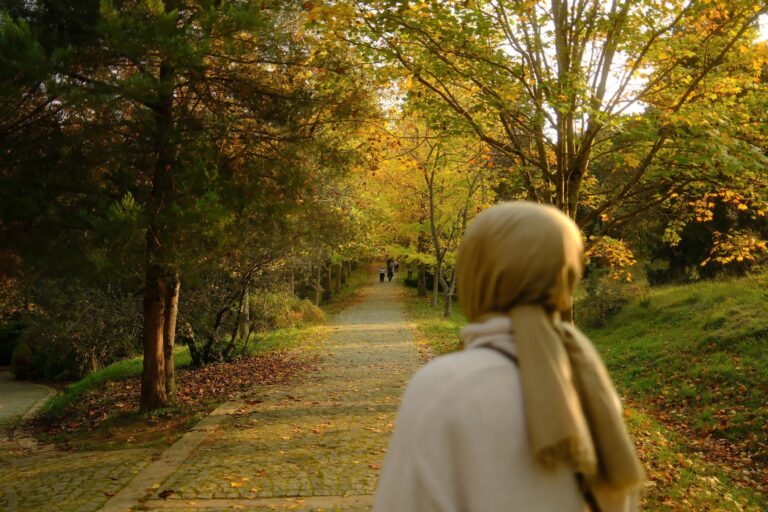
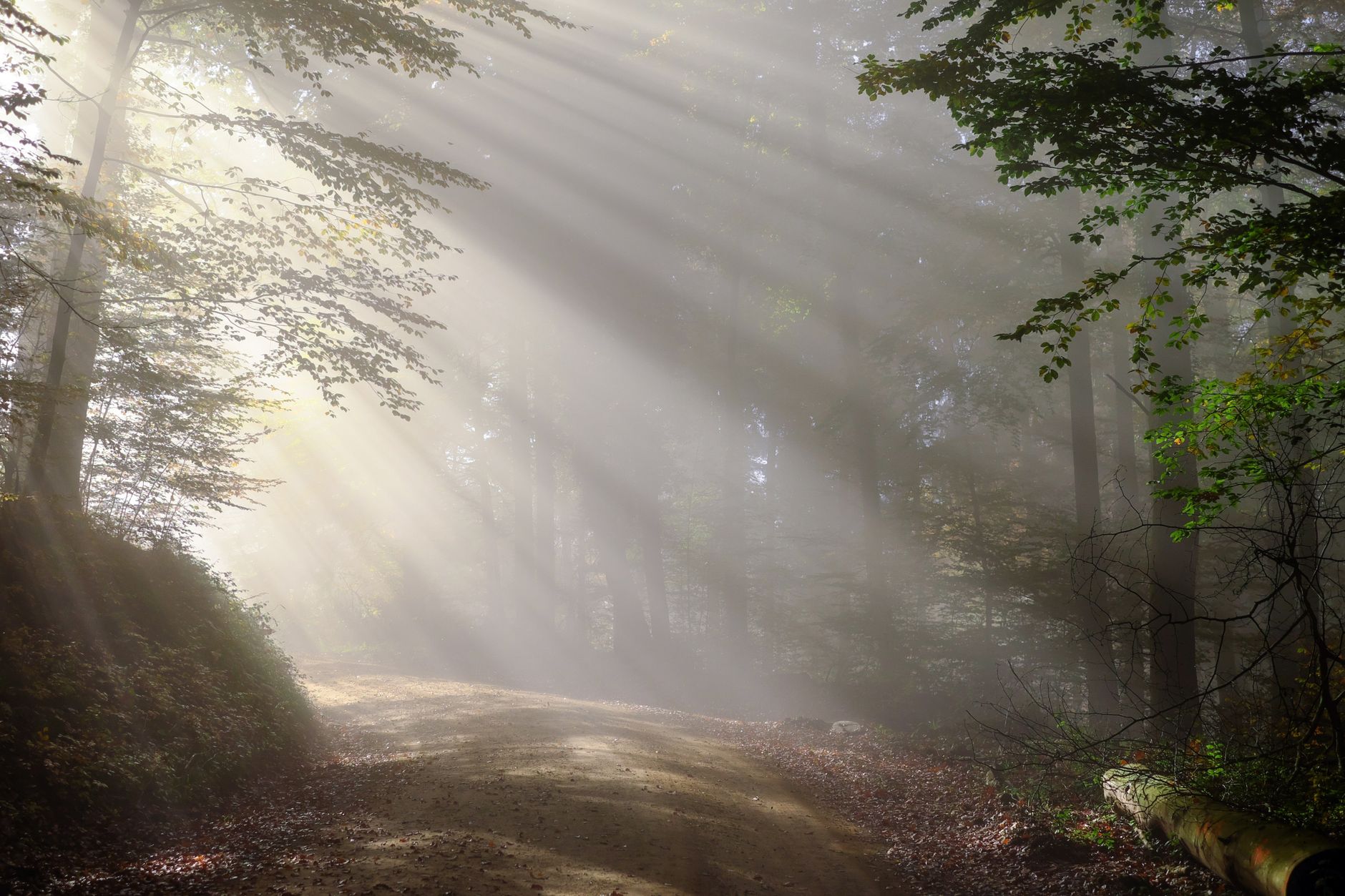
We arrived on a Tuesday in late September, early enough that the light was still low and sideways through the trees. And that was the first surprise — the trees. Not decorative trees, not the young saplings that landscape architects plant in rows and stake upright for their first three years. Pines. Tall ones, dense and dark and clearly older than anything built around them.
Efteling opened in 1952, and it was built into a pine forest that was already standing. The park did not clear the land and then decorate it. It moved in among the trunks and worked around them. You feel this before you understand it. The paths bend for no visible reason, and then you notice: they bend because something is in the way, and the something was here first.
The forest that asks you to walk
The oldest part of the park is the Sprookjesbos, the Fairytale Forest, designed by the Dutch illustrator Anton Pieck. It is not a ride. There is no queue, no restraint bar, no attendant counting people into rows. It is a wooded loop with fairytales set into it — Hansel and Gretel’s house among the trees, a sleeping princess behind glass, a talking tree that clears its throat when you get too close.
You walk it. That is the entire mechanism. You walk, and things appear when you reach them, and if you want to stand in front of the Six Servants for four minutes because the light is doing something to the moss, nobody moves you along.
I watched a woman in her seventies stop at one of the little scenes with her granddaughter and explain, in Dutch I could not follow, what was happening in it. They stood there a long time. Behind them, people simply walked around. There was no pressure in the air — none of that low hum of being processed that I associate with places designed to hold five million people a year.
Because that is what Efteling holds. Nearly six million visitors came through in 2025. The park covers seventy-two hectares; the wider resort covers close to three hundred. And still, on a Tuesday in September, it felt like a large wood with things in it.
What the pace does to a day
I have thought about why since. I think it comes down to what the park considers its main event.
Most parks are organised around rides, and rides are organised around throughput. The queue is not a flaw in that system — it is the system. You are being metered. Efteling has thrill rides too, a whole realm of them, and there is a wooden coaster that made my legs feel strange for an hour afterwards. But the coasters are not the centre of gravity. The forest is. And a forest has no throughput. You cannot queue for a path.
What this produced, over about nine hours, was a day with a shape I recognised from ordinary life rather than from holidays. We walked. We sat down when we were tired, on actual benches, under actual trees. We ate slowly because there was no ride we were rushing to make. At one point I lost the group for twenty minutes and did not particularly mind, and neither did they.
I came out at closing time tired in the legs and not in the head, which is the reverse of how I usually feel after a day out. It is, now that I write it down, the same way I feel after a long walk.
A few practical notes, for what they are worth
Go on a weekday, and go outside the school holidays. This is the single thing that changes the character of the place. The Dutch school calendar matters more than the season.
Arrive at opening and walk the Fairytale Forest first. Most people go straight to the coasters, which means the forest is nearly empty for the first hour. Low light, few voices. It is the best hour of the day and it is free of charge in the sense that everyone else has decided not to take it.
Do not plan the day. I say this as someone who plans days. The park rewards drifting, and every itinerary I have seen for it is essentially a list of queues in a sensible order.
Consider staying the night. There is lodging on the grounds — the Efteling Grand Hotel, the Wonder Hotel, and two woodland areas, Bosrijk and Het Loonsche Land, where you sleep among the same pines. Staying over removes the one genuinely rushed part of the day, which is leaving. You can check dates and availability here if you are curious.
The other seasons
The thing I keep turning over is that the park changes its whole character four times a year, and that the winter version is the one I have not seen and now want to.
Winter Efteling runs from November through February. Half the park is dark by mid-afternoon; the paths are lit; there is snow when the Netherlands gives them snow and something approximating it when it does not. People describe walking the Fairytale Forest in the cold with a hot drink as the whole point of the visit, which is a strange thing to say about a theme park and exactly the thing I would say.
I am not sure I have become a person who likes theme parks. I think what happened is narrower than that. I found a place that had decided, seventy years ago, to build around the trees instead of over them, and every consequence of that decision — the bending paths, the benches, the forest loop you cannot hurry — turned out to be a consequence I wanted.
It is a rare thing, a place that does not ask you to keep up.