This article may contain affiliate links. If you buy through them, Notes From a Slower Life may earn a small commission at no extra cost to you. Learn more.
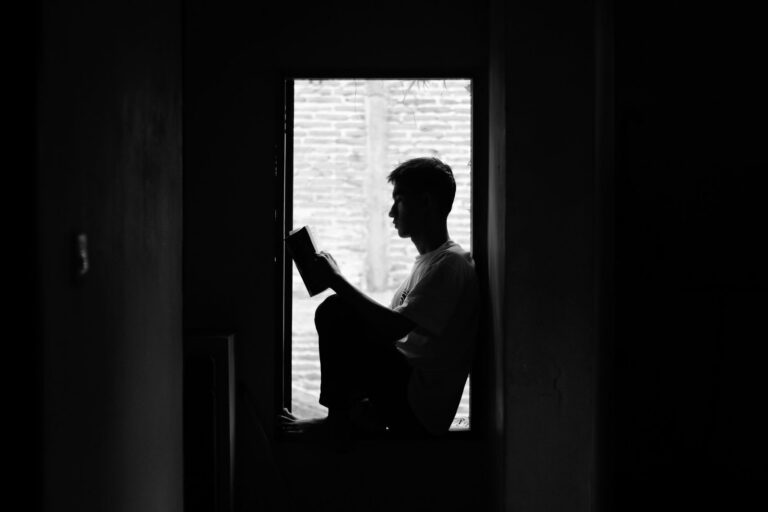
There are mornings that seem to carry the weight of potential, where the sunlight filters through the window with a gentler touch, illuminating the pages of a book waiting patiently on my bedside table. This morning was one of them. The air was crisp, and I could hear the faintest rustle of leaves outside, a whisper of the world stirring to life. I reached for a novel I had been meaning to immerse myself in, its spine cracked just enough to suggest a prelude of stories yet to unfold. Sitting on the edge of my bed, I let the quiet envelop me, and as I turned the first page, I felt the gravity of the words pull me in, inviting me to engage at a pace that would meld seamlessly with the day ahead.
Choosing a novel is a sacred act, a small ritual that requires a deliberate sense of intention. The process is not merely about deciding what to read but about assessing a unique resonance with the narrative that will accompany me through the hours. As I thumbed through the pages, I paused to savor the smell of the aged paper, the way it had absorbed countless thoughts and dreams, the residue of past readers lingering in the fibers. I chose a novel that promised to be both a journey and a destination, one that would not rush me along but would encourage me to wander through its landscape at my own pace.
Settling into my favorite armchair, a worn piece of furniture that has cradled me through many similar mornings, I allowed the world to fade away. The chair has a certain familiarity, the upholstery patterned with muted greens and browns that echo the colors of forest trails. I could feel its embrace, a reminder that I was not merely between the covers of a book, but also nestled within the comfort of a space that had witnessed my slow explorations of literature. This atmosphere, thick with the scent of freshly brewed coffee, was where I would begin my journey through the pages.
As I read, I found myself drawn into the cadence of the sentences. The author’s voice was not hurried; instead, it flowed like a gentle stream, inviting me to linger over passages that resonated with a particular depth. Each paragraph unfolded with a deliberate rhythm, allowing me to absorb its meaning, to connect with the characters as if they were friends I had yet to meet. I became aware of the small details, how the sunlight pooled on the floor, the way the leaves outside danced in the wind, the distant sound of laughter from children playing in the street. All these sensations wove together, creating a tapestry that complemented the world within the book.
There is a beauty in this deliberate pacing, in allowing words to settle like sediment in a still pond. I found myself reflecting on how often we rush through our reading, skimming the surface of stories that deserve our full attention. It is easy to lose oneself in the urgency of life, to treat novels as mere distractions rather than rich terrains for exploration. The characters in this story gradually revealed their complexities, their struggles, and triumphs. I was not merely a spectator; I was a participant, feeling their joys and sorrows as though they were my own.
Words have a weight, and in the act of reading slowly, I felt their gravity.
In moments when I paused to absorb a particularly poignant line, I found that my thoughts drifted, like the sunlight shifting in the afternoon, tracing patterns on the walls of my living room. I would set the book down, letting the silence swell, allowing my mind to wander through the implications of the narrative. It was during these interludes that I noticed the way the shadows deepened in the corners of the room, the way the light shifted as the day wore on. This interplay between my surroundings and the story mirrored the ebb and flow of life itself, a gentle reminder that every moment holds the potential for discovery.
There is a certain intimacy in the act of reading slowly. Words become tactile, each syllable a brushstroke on the canvas of my understanding. I could feel the characters’ emotions coursing through me, mingling with my own experiences. The novel’s themes of love and loss resonated deeply, inviting me to reflect on my own relationships, both tender and tumultuous. The pages became a mirror, reflecting not just the author’s vision but also the kaleidoscope of my own life, colored by memories and dreams.
On a particularly rainy afternoon, I found myself revisiting a passage that described a quiet conversation between the two protagonists, a moment defined by unspoken words. I sat by the window, watching the raindrops trace paths down the glass, and felt a kinship with the characters as they navigated the complexities of their relationship. This simple act of observing nature while being enveloped in the story mirrored my own life, where the external world often parallels the internal landscape. Outside, the rain blurred the outlines of trees, creating a dreamlike quality that seemed to seep into the words I was reading.
As I journeyed through the novel, I noticed the way it encouraged me to find beauty in the mundane. There were passages that lingered, sentences I underlined not for their eloquence but for their resonance with my own experience. I began to see my own mornings reflected back at me, the way I brewed my coffee, the cadence of my breath as I walked through the nearby park, the laughter of neighbors spilling over their fences. The act of reading became less about the destination of finishing the book and more about allowing the narrative to seep into my being, to enrich the tapestry of my daily life.
Eventually, I reached the final pages, but the journey did not end there. Even as I closed the book, the words echoed in my mind, a lingering melody that would not fade quickly. I found myself reflecting on the weight of what I had read, understanding that each story carries its own burdens, its own truths. In taking the time to read slowly, to savor the language and the moments between the lines, I had enriched my own existence.
This slow journey through a novel was not merely an escape, but rather an invitation to engage with life in a more profound way. Each word, each character, had drawn me deeper into a world that mirrored my own, illuminating the complexities of both fiction and reality. As I sat in my armchair, the afternoon light waning, I recognized that the act of reading slowly had transformed a simple narrative into a vibrant tapestry of existence.
In the quiet aftermath, I allowed my thoughts to settle, much like the fading light in the room. The weight of the words lingered, inviting me to carry their essence into the rhythm of my day. I closed my eyes for a moment, feeling the echoes of the story intertwine with the simplicity of my surroundings, a gentle reminder that the beauty of life, much like a novel, unfolds in layers, waiting for us to discover its depths.